Night sky simulator: real stars, Moon and planets
Sky Studyo's night sky simulator shows the real stars, Moon and planets over any place tonight, under its forecast cloud. Change the city light to see how light pollution hides the faint stars.
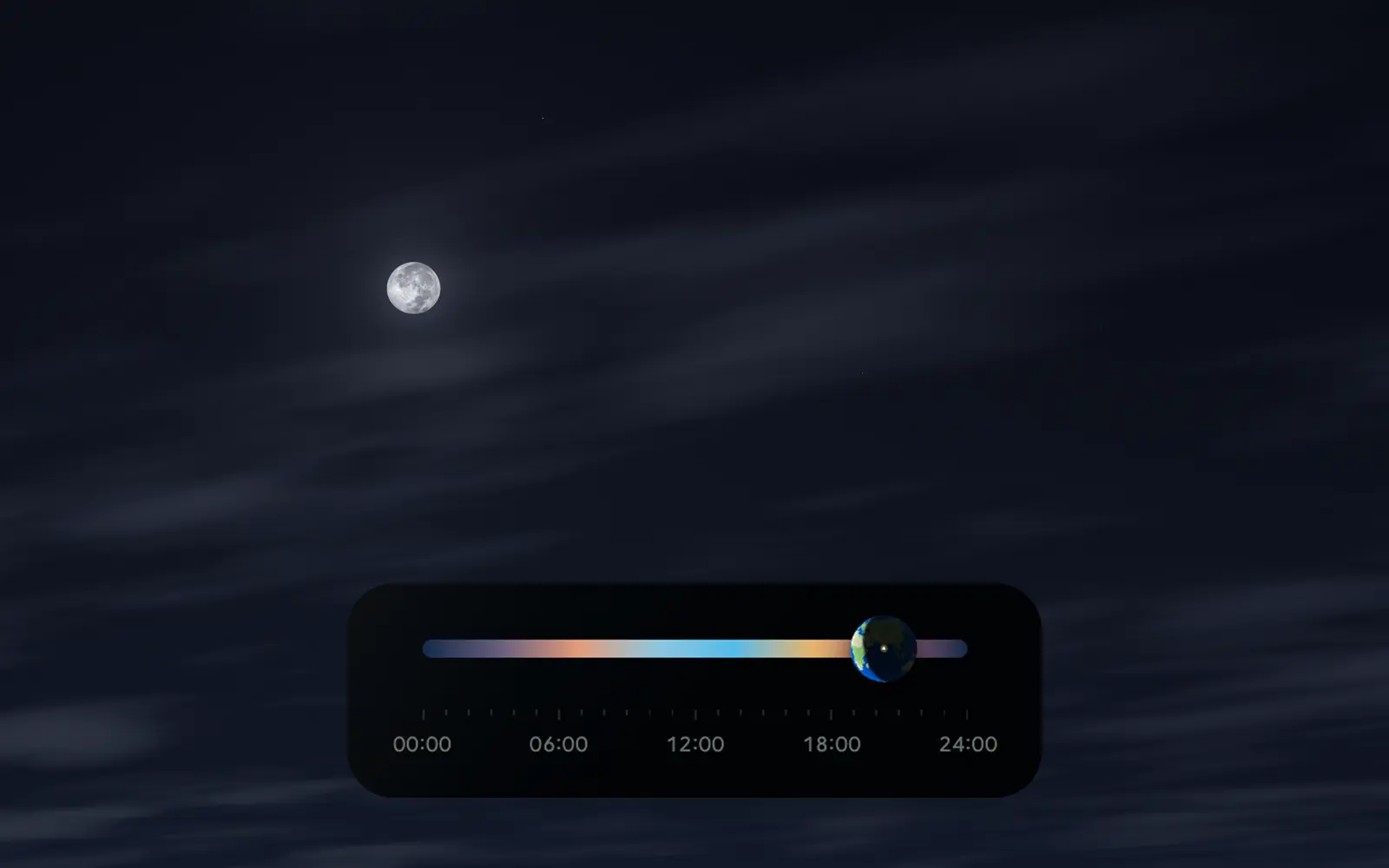
What is in the sky
- Stars: the real bright stars for the place and time, from the Yale Bright Star Catalogue down to magnitude 5.5, as seen looking south. Many are faint and a few are bright, and only the bright ones show colour, as to the eye.
- The Moon at its real position and phase, with a glow that is strongest at full Moon. Lunar eclipses can be added.
- Planets: Venus, Mars, Jupiter and Saturn, from JPL's approximate planetary positions, with real brightness. Venus fades as it thins to a crescent.
- Meteors from the major annual showers, at the rate of whichever shower is active tonight.
- Airglow, the faint natural glow of the upper air, and noctilucent clouds in summer twilight at high latitudes.
- The aurora where the place is inside the auroral oval. See the aurora simulator.
Light pollution
At night a City light slider appears under Atmosphere. It runs on one scale everywhere, from 0% (no artificial light) to 100% (the largest cities), and each place opens at a level estimated from its population. City light lifts the sky's glow and lights the cloud base from below with a warm grey, and it hides the faintest stars first. Twilight and moonlight hide stars the same way. A night sky is never fully black: the Moon and a faint natural glow always light it a little.
Meteor showers
| Shower | Peak | Best seen from |
|---|---|---|
| Quadrantids | Early January | Northern hemisphere |
| Lyrids | Late April | Northern hemisphere |
| Eta Aquariids | Early May | Southern hemisphere |
| Delta Aquariids | Late July | Southern hemisphere |
| Perseids | Mid-August | Northern hemisphere |
| Orionids | Late October | Both |
| Taurids | October to November | Both |
| Leonids | Mid-November | Both |
| Geminids | Mid-December | Northern hemisphere |
| Ursids | Late December | Northern hemisphere |
Frequently asked questions
Are the stars in the night sky simulator real?
Yes, once you choose a place. The bright stars are the real ones for that place and time, from the Yale Bright Star Catalogue down to magnitude 5.5, as seen looking south. Fainter stars are filled in around them.
What does the night sky look like without light pollution?
Far more stars show, because city glow no longer drowns the faint ones. In Sky Studyo, set the City light slider to 0% to see a remote, dark sky, then raise it to see the faint stars disappear first, as they do over a city.
Why can I see fewer stars when the Moon is up?
Moonlight brightens the whole sky, which hides faint stars. A full Moon lights the sky far more than a half Moon, which gives only about a tenth of its light. Twilight and city light hide faint stars in the same way.
When are the major meteor showers?
The Quadrantids peak in early January, the Lyrids in late April, the Eta Aquariids in early May, the Delta Aquariids in late July, the Perseids in mid-August, the Orionids in late October, the Taurids through October and November, the Leonids in mid-November, the Geminids in mid-December and the Ursids just before Christmas. Exact dates shift by a day or so from year to year.
Which planets does it show?
The bright naked-eye planets: Venus, Mars, Jupiter and Saturn, at their real positions and brightness for the place and time. Venus fades as it thins to a crescent.